

What if the air we breathe offered more than oxygen—what if it also delivered trace nutrients and subtle energies that sustain body, mind, and spirit?
Recent scientific inquiry and timeless spiritual wisdom converge on this wild, yet increasingly plausible idea. The emerging concept of aeronutrients (nutrients absorbed through the air) opens a new frontier for understanding breath not just as a biological necessity, but as a vital interface between the human system and its environment. Ancient yogic practices like pranayama and the more profound stillness of meditation may be key tools to harmonize with these airborne gifts.
Aeronutrients: Science Revisits the Breath
In a recent New Scientist article (a must-read after this one), researchers suggest that our bodies may absorb nutrients like iodine, zinc, copper, and manganese from the air. These trace elements may enter via the lungs, nasal passages, or skin, bypassing digestion entirely. The evidence? Populations living near coastlines often have higher iodine levels, presumed to come not from food, but from inhaling sea air rich in mineral particles.
This proposition challenges the long-held view that nourishment is solely about food. It suggests that our environment, and how we breathe it in, could be an active part of our nutrient intake.
Pranayama: A Sacred Science of Breath
In the yogic tradition, pranayama is the science of breath regulation that directs prana, which is the life force of energy, throughout the body. It goes far beyond oxygen exchange. The breath is seen as the carrier of subtle energies that influence physical health, mental clarity, and spiritual unfoldment.
Deep pranayama techniques such as nadi shodhana (alternate nostril breathing) or ujjayi (oceanic breath) have long been considered practices that balance the nervous system, detoxify the cells, and increase vitality. Even the simple ones we practice in FISU do this. Now, through the lens of aeronutrients, these practices might also amplify our capacity to draw in airborne nutrients, especially in cleaner, more mineral-rich environments.
Meditation: Creating Synergy with Subtle Forces
Where pranayama acts as a channel, meditation deepens our receptivity. The body shifts into a parasympathetic state through inner stillness, where cellular repair, hormonal balance, and energetic absorption are optimized. In this state, we may become more attuned to the subtle interplay of environmental inputs.
FISU Meditation, with its personalized mantras and spiritually empowered techniques, enhances this process. It brings greater alignment between body, breath, and being, allowing the meditator to access more profound silence and harmonize with finer energetic or nutrient-based forces in the environment. Meditation may create synergy with subtle nourishment, bridging biology and spirit.
A Cultural and Scientific Renaissance
For educators and social scientists, this is a decisive interdisciplinary moment:
- How does traditional knowledge about breath and energy inform modern health science?
- Could pranayama and meditation play a role in ecological and urban health strategies?
- How might cultural beliefs about air, spirit, and vitality shape community well-being?
Ancient teachings and contemporary studies suggest that we are far more porous and connected to our environment than we often realize.
Conclusion: Breath as a Bridge
Whether through the structured rhythms of pranayama or the still silence of deep meditation, the breath becomes more than a biological function—it becomes a bridge to subtle nutrients, energy, and the deeper intelligence of life itself. As science continues to explore what mystics have long taught, we are reminded that to breathe consciously is to nourish holistically.
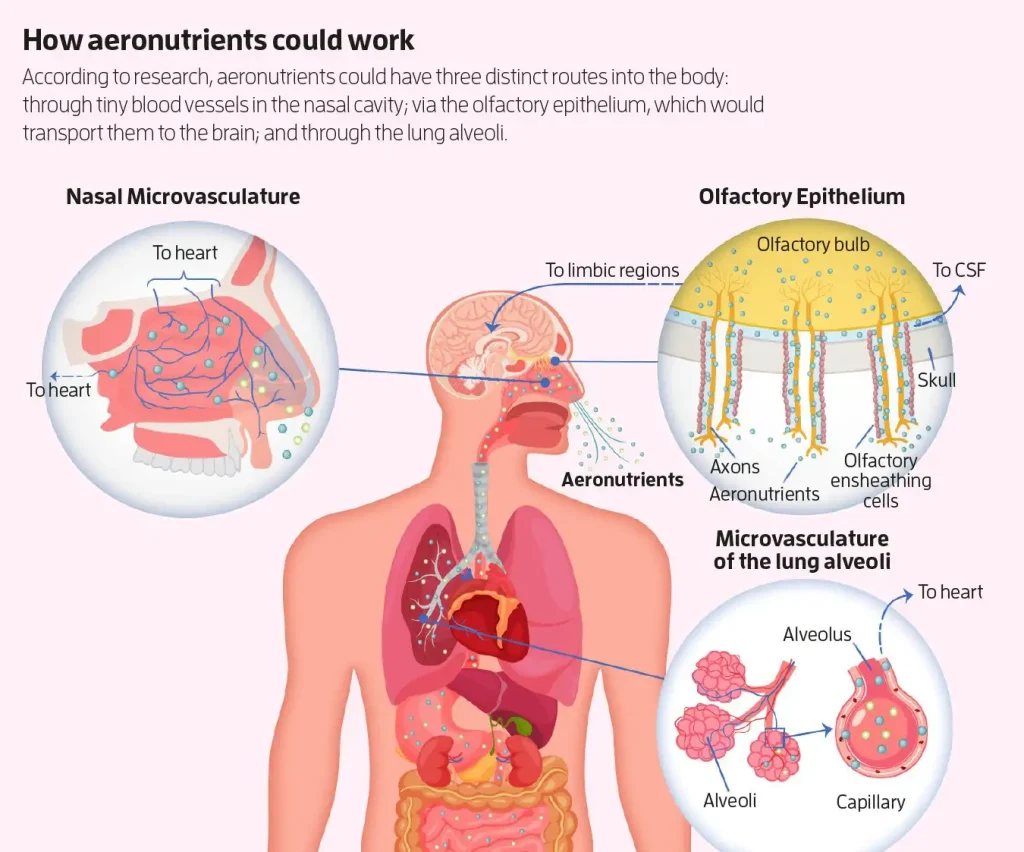
Photo Credit: New Scientist & Flávia Fayet-Moore and Stephen Robinson

