
Gururaj Ananda Yogi, originally named Purushottam Narsinhram Valodia, was born on March 3, 1932, in the province of Gujarat, India. He grew up in a prosperous family engaged in both business and farming. From an early age, Gururaj exhibited a profound spiritual awareness, asking questions about the meaning and purpose of life, as well as the possibility of experiencing the divine, even as young as three years old.
When he was just five, he ran away from home in search of a personal encounter with the Divine. For four and a half months, he traveled from village to village, visiting temples and speaking to holy men. His desperate parents eventually found him wandering a village street, barefoot and ragged. When asked about his journey, he explained that he had visited as many temples as he could, but lamented that “the gods were lifeless and would not speak to me.”
From the ages of five to fifteen, Gururaj’s life was quite typical for a child of his culture, except for his unyielding desire to directly experience a “Reality” beyond his own consciousness. This desire drove him to read numerous religious scriptures and books on philosophy and psychology.
As he grew older, his readings, coupled with his strong intuition, led him to understand that the greater truth he sought was within himself, as it was within all human beings. He encountered many names for this inner “Reality”—some called it the “Kingdom of Heaven Within,” others the “Divine Spark Within,” or the “Universal Mind,” or even the “Real Self.” Western psychologist Carl Jung spoke of the “Collective Unconscious,” while other philosophers referred to it as the “Superconscious Mind.”
Each book he read seemed to offer a new term or perspective, but those who claimed to have experienced this inner truth always emphasized that the specific words used to describe it were ultimately unimportant—it was the experience itself that truly mattered. And how the young Gururaj longed for that experience!


He understood that the realm of “Superconscious Awareness” was deeply concealed beneath numerous layers of conditioning embedded within the subconscious mind. If he could find a way to break through these murky layers of subconscious conditioning, the profound “Superconscious Self” would reveal itself to his conscious mind. This revelation would hold the answers to all the questions and concerns of his conscious self.
From his study of scriptures, philosophy, and interactions with various gurus, he learned that one traditional way to access this higher “Reality” was through meditation. However, what type of meditation should he pursue? How should it be practiced, and for what duration? These questions eluded him, making him realize he needed guidance from a teacher.
This brought about another dilemma: Which teacher should he choose? In his native Indian culture, there were many who claimed to offer spiritual knowledge and practices. He recognized that the right teacher for him must truly have the wisdom and spiritual power necessary to guide him step by step on the inward journey toward experiencing the Superconscious Self consciously.
Determined that finding the right teacher was of paramount importance, he left home once again at the age of 15. This time, he embarked on a year-long journey across India, visiting ashrams (spiritual teaching centers) and meeting with gurus (spiritual teachers) from various traditions. During this intense search for his teacher, he received guidance in numerous meditation techniques and spiritual practices.
Eventually, his quest reached its conclusion. In a monastery near Almora, located in the Himalayas, he found the guru he had been seeking—Swami Pavitrananda. Under the guidance of Swami Pavitrananda, Gururaj was led step by step through the illusory veils of the conditioned conscious and subconscious mind, towards the realization of the Superconscious Self.
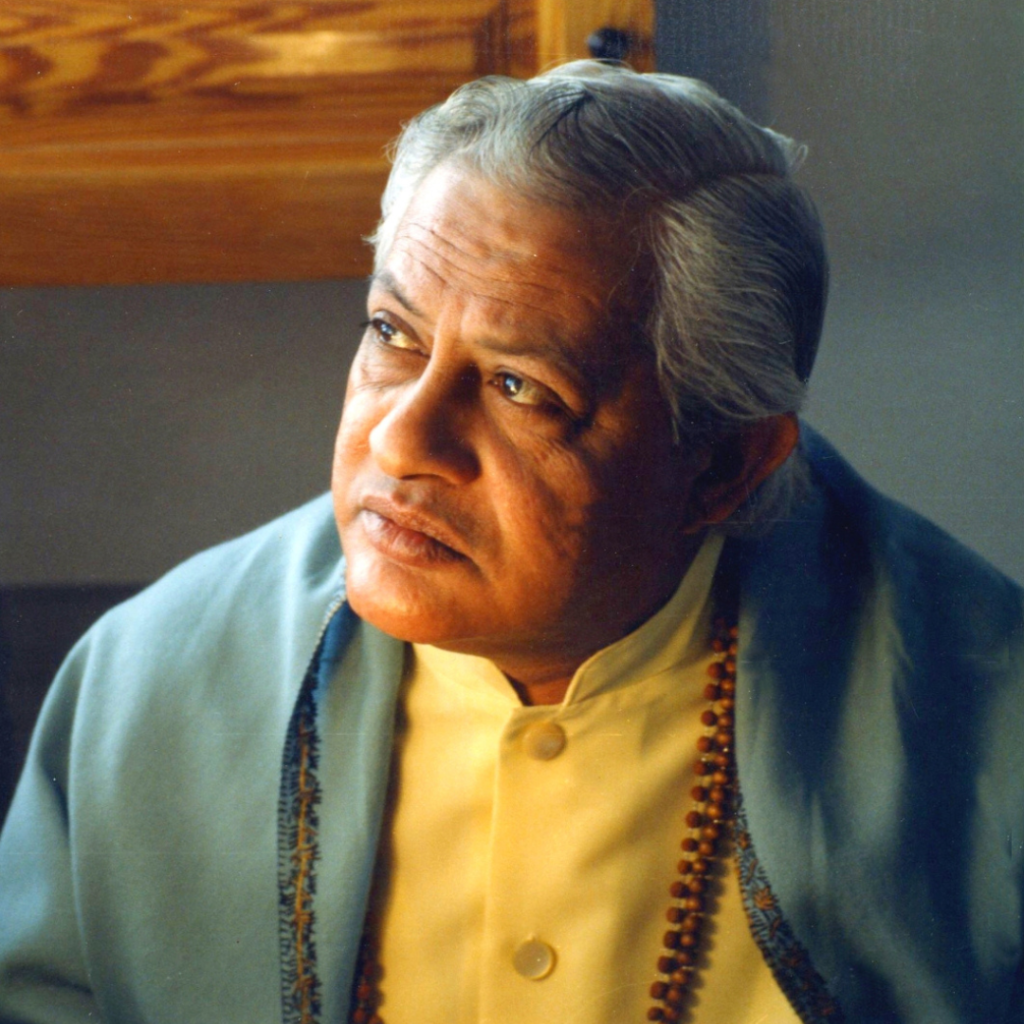
After a period of intense and meticulous preparation under Pavitrananda’s guidance, Gururaj reached a crucial stage in his spiritual journey—a point where he was ready for a breakthrough into full illumination. Gururaj shared, “For some time, my meditations had been extremely deep, and I knew I was prepared for the experience of Nivrikalpa Samadhi.”
(Nivrikalpa Samadhi: A state of consciousness in which there is a continuous, fully opened channel between the conscious mind and the superconscious mind.) Then, on a hot Thursday afternoon, the long-anticipated moment finally occurred. In Gururaj’s words: “Pavitrananda casually called me to meditate with him. In his presence, I almost immediately slipped into a deep meditation. I merged into a blissful state of consciousness that transcended space and time.” It was a state of “joyful, eternal freedom, immense peace, and vast power that surpassed all the limitations and conditioning of my mind.” He knew with an indescribable certainty that “what I was experiencing was, indeed, my True Self.” It was absolutely clear that “my mind, my body, and my personality were merely reflections and expressions of this true, real Nature.”
He continued, “When I emerged from meditation, two hours had passed, but it might as well have been two minutes because I was so far removed from ordinary concepts of time. When I opened my eyes, everything around me seemed covered in gold.” He could perceive with complete and immediate certainty, not as a mental concept but as a vivid experience, that “everything around me—including myself—was simply dancing, vibrating patterns of energy. I knew without a doubt that I was the same joyous, boundless energy as everything and everyone around me—as all of creation.” It was as if “my consciousness was their consciousness, and their consciousness was mine.” At the same time, it felt “as though we were all part of an infinitely larger, vast consciousness.” And yet, he understood that “no words could ever begin to convey the full reality of that experience—one must directly experience it to truly understand.”
Nevertheless, the human creative impulse often drives us to express our inner realizations outwardly. For this reason, some individuals, like Gururaj, who have fully attained this state, as well as many others who have only glimpsed it, have written extensively about their experiences. They chose words or names that seemed appropriate, but these terms are usually influenced by cultural heritage—particularly religious or philosophical backgrounds.
The many names for “illumined consciousness.”
This state of enlightened consciousness has been referred to by many different names. For instance, a Christian or Jew might call it “God-realization” or reuniting with the “Divine Source.” In contrast, a Burmese Buddhist might use the term “Nirvana,” while a Japanese Zen Buddhist might refer to it as “Satori” or “Enlightenment.” Western philosophers may speak of “Unity Consciousness,” Indian philosophers of “Brahman Consciousness,” and Western psychologists might use “Transpersonal Awareness.” The term “Self-Realization” is often used as the most neutral description, as it carries no particular religious or philosophical connotation.
After fully entering the state of self-realization, Gururaj could easily see a truth he had encountered many times in philosophical studies. In his own words: “It was so very obvious to me that, once the state had been realized, it mattered little how one reached it, provided the path was suitable for the individual. One could be Christian, Jewish, Hindu, Muslim, Buddhist, Taoist, or even a student of Eastern or Western philosophy.”
According to Gururaj, someone might also reach this state without following a path with typical religious or spiritual associations. They might be following Western transpersonal psychology, such as Carl Jung’s approach, or simply be an everyday person engaged in life’s daily responsibilities with little interest in religious, philosophical, or psychological concepts. For Gururaj, this was “a matter of direct personal experience, not of beliefs, philosophies, or lifestyles.”
What truly mattered, according to Gururaj, was a “sincere effort to reach beyond the petty ego, the small conditioned mind, toward a greater Reality.” The crucial point was commitment and sincerity, no matter the path. If someone possessed genuine sincerity and dedication, Gururaj saw—through his experience with Pavitrananda—that proper meditation and self-help practices could be extremely helpful, if not invaluable.
Many realizations came in the immediate aftermath of his enlightenment experience, but the most important for him was the continuous, deeply joyful fulfillment that came with a fully realized consciousness. He felt that there was nothing in the world that could offer him greater happiness or satisfaction than he already had. This led him to consider living a peaceful, secluded life as a monk in a remote Himalayan cave. However, that path was not his to take.
Pavitrananda insisted that Gururaj immerse himself in the world. He was to live as a householder, deeply involved in the vibrant and dynamic life of Western civilization. He was meant to personally experience the pleasures and sorrows, the challenges and solutions, the creativity, and the fulfillment that come from actively participating in the world. With this experience, he would be far better equipped to help Western individuals when he eventually began his work as a spiritual teacher. His destiny was to guide others through meditation and self-help programs.
Therefore, it became necessary for Gururaj to marry, raise a family, and live and work in the West. To prepare for these responsibilities, he studied English, commerce, and accountancy. In his early twenties, having completed his education, he felt ready to move to the West..
He emigrated from India to South Africa, choosing the country primarily due to the relative ease of immigration. Having lived there for three years during his childhood alongside his father, he had established residency rights that facilitated the move.
In South Africa, he embarked on a career in business. Succeeding in the highly competitive modern business world demands dedication, energy, and creativity. For Gururaj, this success was deeply intertwined with his ability to tap into the vast reserves of the Superconscious Mind, which he described as an almost boundless source of energy and intuition. With his self-realized state, he could draw upon this inner resource constantly.
This gave him an exceptional level of energy and a remarkably developed intuition. His intuitive abilities, akin to a creative “sixth sense,” allowed him to make practical decisions with great accuracy—a critical advantage in the fast-paced demands of business. His energy levels were such that he required just two to three hours of sleep each night, enabling him to work up to 16 hours daily while still managing his many other commitments.
With such inner reserves of creativity and energy, Gururaj achieved significant success in his business pursuits. Within a relatively short time, he rose to become the director of multiple companies spanning industries including finance, films, advertising, publishing, accountancy, and more.
However, even while deeply engaged in business, Gururaj remained clear that accumulating wealth was not the ultimate goal. As he once said, “Wealth is not an end in itself. Money is simply a resource, like any other man-made resource. The real test lies in how we use it: Do we use our wealth to uplift ourselves, our families, or our communities? Or do we use it merely for personal comfort, prestige, and power—feeding our small, limited ego?”
True to his words, Gururaj dedicated a substantial portion of his business income, as well as his time and energy, to various spiritual and community projects. He played a major role in establishing an Indian cultural society in Cape Town, a significant achievement for the local Indian community.
Besides business and community projects, Gururaj also made time for his family. Despite a demanding schedule, he showed deep devotion to his family, ensuring he was an active presence in his children’s upbringing. Those who knew him well often remarked on his warmth and almost magical way with children.
His sensitivity and intuitive nature also manifested in his artistic talents. Gururaj was a gifted musician and poet. Starting in his adolescence, he composed several moving pieces in various Indian musical forms. One of his compositions, created when he was just 15, was described as embodying the yearning of a finite consciousness striving to reach the infinite. The emotional depth of his work often left listeners profoundly moved.
Though music played an important role in his life, it was poetry that truly served as the outlet for his inner realizations. He began writing poems in his early adolescence and received numerous awards in India by the time he was 20. Some even favorably compared his work to that of Tagore.
A collection of his poetry has been published under the title Glimmer of Love, alongside The Master Reflects, which gathers Gururaj’s sayings, and From Darkness to Light, a compilation of his Satsangs or talks. To offer readers a glimpse of his poetic talent, one of his most exquisite poems, Stillness of Eternity, is presented here. Like the rest of his poetry, this piece was composed swiftly and spontaneously, appearing to flow directly from the Superconscious Self to the page, bypassing the conscious mind’s analytical thinking.
STILLNESS OF ETERNITY
Winged birds of time fly on.
Flying to the rising sun and turning back at dusk:
A long journey it seems to reach back at starting point –
Winged birds, time’s creatures, fly on.
I, that am, forever still, know –
Of no journey’s start, nor end, nor flight.
Your out spanning wings, measuring the sky,
Swift and slow, slow and swift,
Smiling at the wingless snail treasuring earth:
Both, in smog or dirt, in motion bound.
I, that am, forever still, know –
Of no measure, nor motion, neither doing’s undoing …..
Bewildered you in your wingedness, the wingless too –
Chained by grooves of motion’s air and earth
Tossed and twirled and set afire, seemingly so new:
To fly on, to plod on, through many a life and birth.
I, that am, forever still, know –
Of no air, nor earth, nor life nor birth, still ever new
By most standards, being a poet, musician, successful entrepreneur, community leader, and dedicated family man would amount to a fulfilling life. This was certainly in line with Pavitrananda’s guidance to “immerse himself in the world.” However, it’s essential to note that these instructions were given with a larger goal in mind. His active engagement in Western society was meant to prepare him for the day when, as a Spiritual Teacher, he would guide others on their journey toward self-realization.
As Gururaj himself reflected, “it had been in the back of my mind all those years, ever since meeting Pavitrananda.” Over time, he became increasingly aware of the critical role meditation plays in helping individuals gradually access the Superconscious Self. He also recognized that each person is unique, and for meditation to be truly effective, it must be tailored to the individual’s needs and lifestyle. The practice should enhance all aspects of life—work, relationships, and personal growth—within the path each person follows.
Throughout the years, Gururaj continued his extensive reading on spiritual, philosophical, and psychological topics, while practicing various forms of meditation. More importantly, he cultivated his gift of intuitive perception. By combining knowledge, experience, and intuition, he began teaching meditation, consistently emphasizing the importance of selecting techniques that are suitable for each person. This approach allowed him to create a method that matched meditation practices to the distinct mental, physical, emotional, and spiritual needs of each individual.
Over the years, Gururaj personally tailored meditation practices for thousands of people from diverse racial, religious, and cultural backgrounds, including Christians, Jews, Hindus, Muslims, Buddhists, and non-religious individuals. Observing their rapid progress, he was continually impressed by how effective these practices were in helping people on their journey toward self-realization.
By 1975, Gururaj had concluded the business chapter of his life and remained in Capetown with his family, dedicating himself to serving humanity full-time. From that point forward, his life was committed to assisting individuals worldwide in their spiritual journeys toward self-realization.
In pursuit of this mission, Gururaj, along with like-minded individuals in several countries, established the International Foundation for Spiritual Unfoldment (IFSU) in the fall of 1975. Within a year, national branches of the foundation were established in nine countries, making meditation practices accessible to anyone who sought them.
It is essential to clarify an important aspect of Gururaj’s philosophy and work. As he explained, “The role of an external guru is to help awaken the inner guru within each individual. My purpose is to guide people to discover their inner guide and awaken to their greater self. Once that is achieved, my guidance is no longer needed because each person becomes their own guru.”
Gururaj emphasized that he was simply an ordinary human being, different only in that he had completed the spiritual journey many are still striving to reach, which enabled him to serve as a guide. He often said that whatever spiritual attainment he had achieved was within reach of all human beings.
In line with this understanding, Gururaj insisted that he be treated as a regular person, with no more reverence than the basic respect any individual deserves, and he was adamant that IFSU not turn into a “guru cult.” His vision for IFSU was that it become a global fellowship of individuals on the path to fulfillment and self-realization.
This vision was realized as branches of the foundation emerged in several countries, including the United Kingdom, the United States, Denmark, Spain, Germany, Israel, and South Africa.
Gururaj eventually began spending up to nine months of the year traveling, offering public talks, interviews, consultations, and residential courses to help meditators deepen their meditation practice.
He was a crucial speaker at the following public symposiums and conferences:
Southern Illinois University, Edwardsville
Washington University, St. Louis
Loyola University, Chicago
Theosophical Society: Boston, London,
Copenhagen, Cape Town (South Africa)
Vedanta Society: South Africa, England
Lorton Men’s Prison, Virginia
Pastoral Counselling Centre of Greater
Cincinnati, Ohio
University of Calgary, Calgary, Canada
University of British Columbia, B.C., Canada
Max Mueller Institute, New Delhi, India
Benares University, Benares, India
Lions Club, Barcelona, Spain
Rotary Club, South Africa
World Parliament of Religions, Chicago, 1984
The Wrekin Trust Symposium, “Mystics and Scientists,” special guest of Sir George
Trevelyn, King Alfred’s College, England, 1979
Holistic Health Symposium University of Nevada, Las Vegas, 1978
International Neuropsychiatry Symposia, South Africa, 1982
Annual Meeting of Association for Humanistic Psychology, Washington, D.C. 1982
International Business Leaders Peace Conference, Boston, Mass 1982
Sociedad Española de Meditación
Dansk Meditation Samfond
British Meditation Society
American Meditation Society
Canadian Meditation Society
Irish Meditation Society
Sunday Telegraph, London, 10th April 1983
Yoga Today, United Kingdom, 1984
Television Series, Civilizations with Enrique Quesad, Madrid, Spain
Page 5 TV 5, Las Vegas, Nevada
Today in Chicago, CBS TV, Chicago
Focal Point, KTIV TV, Sioux City, IA
Party Line, NBC TV, Sioux Falls, S.D
Midday Am, NBC TV, St Louis
At Your Service, KMOX, CBS Radio, St Louis
Mac & Friends, KWIT Radio, Sioux City, IA
The Nature of Fear and Anger; How to Handle Negative Thinking
Toward a New Perspective of Living: Inner Tranquillity
Stress and Cardiovascular Disease
The Psychology of Growth of Consciousness
Fear of Death, Mechanics of Physical Death …What is it that survives Physical Death?
Meditation and Psychotherapy: A Combined Approach
Barriers That Block Us from the Experience of Love
Relaxation Techniques and Stress Management
What is Inner Growth and Why is the Path Not Smooth?
The Mechanics of Healing: A Non-pharmacologic Therapy
Meditation: A Journey beyond the Mind
Why is Nature So Apparently Cruel? Humility & Suffering
Prayer and Positive Positioning Self
Meditation: Physiological Basis, Clinical and Preventative Usage
Illness: Mental, Physical, and Spiritual. How should this be Accepted?
Despite Gururaj’s declining health and worsening diabetes, his remarkable energy and unwavering commitment to serving his chelas (students) remained undiminished.
During this time, his family in Cape Town made a significant sacrifice, as they saw him for increasingly shorter periods. The demand for his teachings and his physical presence continued to grow, with his influence expanding across multiple countries. While exact numbers are unknown, it is estimated that nearly 100,000 individuals worldwide received personalized spiritual practices from Gururaj.
The late 1970s marked a period of rapid global expansion for the organization. Gururaj’s dedication to his students was boundless, yet in 1980, a series of unexpected events occurred. These events would reshape the organization and signal a new approach to the delivery of the teachings.
Gurus are extraordinary individuals, and their Divine simplicity can often seem perplexing to the average person or meditator. This is because they operate from a level of consciousness that surpasses ordinary understanding.
The powerful energy embodied by a Spiritual Master acts as a mirror, reflecting back to us who we truly are.
Personal spiritual growth demands self-reflection and, at times, can feel confrontational. The cleansing nature of this process is not always appreciated, and for those not fully committed to the Spiritual Path, it can present challenges.
During this period, many meditators who found the growth process too difficult chose to leave in large numbers. These were key figures from various countries, marking the beginning of a new chapter in the evolution of the teachings.
The teachings Gururaj offered in the early years provide a comprehensive reservoir of wisdom on countless topics, emphasizing the profound spirituality of pure consciousness.
In the following years, while the core essence of the teachings remained the same, their presentation and method of delivery underwent significant transformation.
Gururaj had never positioned himself as an untouchable Guru, always remaining accessible. In the years that followed, his connection with his students deepened on a personal level. Despite deteriorating health, he kept up his rigorous travel schedule month after month.
The love and admiration shown towards him were overwhelming, deeply moving, and transformative. Coupled with personal meditation practices and the wisdom he shared, these experiences helped dissolve any emotional barriers, allowing the soul to awaken fully.
During this period, many people found themselves in close contact with Gururaj. These interactions acted as a catalyst for personal growth. Some foresaw that Gururaj would either ascend to a heightened spiritual stature or fade from prominence.
Even among meditators, there were those who distinguished between the man and his teachings. However, this perception often reflected an individual’s own level of spiritual development. For those who had achieved inner unity, such distinctions never existed.
Although Gururaj continued his extensive travels, the number of participants in his courses gradually decreased. Large gatherings of 500 attendees were replaced by smaller, more intimate groups of 30 to 120, yet the atmosphere had shifted profoundly.
A true spiritual master is not concerned with the ebb and flow of followers. He offers his teachings selflessly, expecting nothing in return. People come and go, taking only what resonates with them, which speaks to how few truly grasp the depth of a Master’s teachings.
The evolution in Gururaj’s teachings placed a greater emphasis on the personal interaction with him. Being near one’s Guru can be a challenging experience, as the teacher serves as a mirror, reflecting the individual’s true self back to them.
This reflective process was also a core part of the personalized meditations Gururaj was known for, but when magnified by the presence of the Guru, its intensity was amplified significantly. This is perhaps the greatest gift a Guru offers – an unfiltered, honest view of oneself.
This deepened process was experienced by all of his students, propelling their spiritual growth at an accelerated pace. Over the years, the branches of IFSU gradually expanded in a slow but steady manner.
As Gururaj’s health declined, long-distance travel became increasingly difficult, both for him and those caring for him. It was uncertain when he might stop these trips. Witnessing his constant pain and exhaustion was heartbreaking at times, leading many to question whether he should continue. He was aware that South Africa was geographically and financially distant for most of his followers.
Yet, out of love and devotion for his students, Gururaj continued traveling. He often referred to his chelas as his children, caring for them in much the same way. Like a devoted father, he was willing to sacrifice his health to be with them. However, in this case, the question of whether to make that sacrifice never arose. While parents may feel responsible for their children, the bond between a Guru and a disciple resembles a pure, spiritual love – one that transcends the physical realm. In this connection, hearts unite in perfect harmony.
For the disciple, this experience was indescribable, a state of bliss. To feel wholly and unconditionally loved is a privilege that many may never know, even in the most intimate relationships.
For the dedicated disciple, this was an experience of “Divine Love” that transcended books, assumptions, and intellectual analysis. It elevated you beyond any earthly, physical, or mental experience. Describing it in words is challenging because no adjective can fully encapsulate these profound feelings.
Those disciples who were in close proximity to the Guru were truly blessed with this rare opportunity. Many came to realize that the Avatar was present among us in the physical form. We celebrated, feeling incredibly fortunate to have this experience. It was as if we were living like the modern-day Disciples of Christ.
Gururaj’s teachings have the potential to transform the world. While they resonate with ancient scriptures like the Bible, Bhagavad-Gita, and Koran, they extend further, offering something unique. These revered texts lead seekers to the level of Sattva, or Light, but stop there. Gururaj’s teachings take a step beyond, offering clear guidance on how to transcend into the core of oneself and journey into the infinite.
As Gururaj shared his teachings with the world, he also prepared for his eventual departure. He often emphasized that his mission was not just to share his wisdom but also to find someone who could carry forward his work with complete purity and realization.
Much like a solar system, Gururaj was the central source of energy, the sun, with his close disciples like planets revolving around him—some nearer, others at a greater distance, each where they were meant to be. We’ve likened the Guru-Chela relationship to a love affair, one that blossoms within the heart and deepens through spiritual growth.
When love is complete, it cannot be divided into unequal portions. This expression of love extends equally to everyone and everything. In the same way, every disciple of the Guru receives love in equal measure. Love is universal, and when it is pure, it manifests equally to all. Any imbalance in that love would mean it is not true spiritual love.
On the evening of August 31st, 1986, Gururaj made a phone call from his home in Cape Town, South Africa, to Rajesh, one of his English disciples. During the call, he informed Rajesh that he would be his “Spiritual Heir.” Although Rajesh had suspected this might happen, hearing it directly from his Guru filled him with joy.
Gururaj explained to Rajesh and Jasmini that he would need to guide them through various experiences and practices to prepare them for the succession. However, at this stage, he requested that no one else be informed, and Rajesh was instructed to keep it confidential. Gururaj planned to visit the UK in October for residential courses in England and the US, where he would further discuss these matters.
As the months passed, Gururaj returned to England, reaffirming his earlier message. He mentioned that his time was now limited and that it was essential to prepare Rajesh and Jasmini to continue his mission.
Gururaj suggested taking them both through certain experiences outside of the UK, proposing the island of Cyprus as a possible destination for March, ahead of the usual spring residential courses.
Rajesh, who worked as a travel agent, began organizing the trip. Over time, word of the Cyprus retreat spread, and others were invited. However, only one other meditator from the US was aware of the original purpose of the journey, Vidya Anderson. She was made fully aware by Gururaj some time before that Rajesh would be his successor and confirms that fact.
Rajesh and Jasmini were not concerned about additional invitations, knowing that Gururaj would follow his own plans regardless of who attended.
By March 1987, the Cyprus trip had grown to include about twenty participants, mostly national leaders of Gururaj’s organizations from around the world. This gathering offered Rajesh, Jasmini, and all attendees a wealth of new experiences.
As March approached, all preparations were completed, and the group traveled from London to Larnaca, Cyprus, heading towards Limassol, a popular coastal resort. They stayed in spacious apartments overlooking the sea.
Part of Rajesh’s preparation was the transference of Shakti so that Rajesh could help others as Gururaj had done by emanating a divine force or power that heals and corrects. The group returned home and many to the residential deepening course that Gururaj held in the UK which would be his last there.
On the last day of the course, Gururaj did not say farewell to his students that day, a gesture that symbolized his ongoing spiritual presence. He assured them that he would always be with them in spirit, and whenever they called upon him, he would be there. On the return journey, Rajesh asked Gururaj why he had requested him to lead the final Satsang. Gururaj simply replied, “I wanted to get you started – the time has come.”
Gururaj spent the weekend in London before traveling to Canada. During this time, he had deep conversations with Rajesh and Jasmini about the future of his teachings, staying up all night to record these significant moments on tape.
In recognition of his spiritual journey, Gururaj gave Rajesh the suffix “Ananda” to his spiritual name, reaffirming that he would continue his work and asking him to care for his children.
Gururaj was expected to return from Canada for a brief stay in London before heading back to Cape Town. However, when he arrived, there was a sense of finality in the conversations, as if everything had already been resolved, and nothing more needed to be said—reflecting the truth of the situation.
Gururaj’s passing on Monday, May 17th, 1988, quickly spread across the globe. Even when one anticipates the possibility of death, the loss of a loved one is always deeply felt, especially when the physical connection is severed. Gururaj suffered a massive heart attack at his home while in the dining room, with his loving wife, Lata, by his side. As per local customs, he was cremated that same evening in his hometown of Cape Town, South Africa.
Unfortunately, none of his international meditators were able to attend the ceremony.
Months later, Rajesh and Jasmini established a new organization, the Foundation for International Spiritual Unfoldment (FISU), a slight modification of the original International Foundation for Spiritual Unfoldment (IFSU). Gururaj had shared his teachings globally and laid a strong foundation. FISU was created to carry forward his legacy as a living testament to the spiritual evolution he taught.
Gururaj Ananda Yogi, regarded as one of the most influential spiritual teachers of the 20th century, imparted wisdom on truth, love, and hope, empowering individuals to lead more meaningful lives. Today, his teachings continue under the spiritual leadership of Rajesh Ananda.
Rajesh’s Beloved wife, Jasmini Ananda, passed away on Thursday, 27th October 2022 and Rajesh continues their legacy.
FISU Meditation is my transformative journey, helping me connect with my inner self and discover my true path in life. Initially, meditation allowed me to escape the constant noise of my mind and the world around me, enabling me to simply exist. In that stillness, I learned to observe my thoughts without judgement, cultivating a clarity that permitted me to see my life in a new light. Meditation has unveiled patterns that limited my growth and held me back from leading a more fulfilling life. I began to recognise what is essential to me—the passions I had overlooked, the values I wished to honour, and the direction I felt compelled to pursue. More significantly, I learned to stop doubting myself and to trust my inner intuition, the wisdom within that guides me forward.
Incorporating FISU Meditation into my daily routine has enabled me to alleviate stress, anxiety, and depression, allowing me to approach everyday challenges with a calm and reflective mindset. Through regular meditation and the compassionate guidance of my esteemed Guru Rajesh Ananda and the FISU teachers, I have learned to achieve harmony in body, mind, and spirit. This personal transformation has empowered me to unlock my potential and realise my personal, professional, and spiritual aspirations.
The more I meditated, the more I realised that discovering my path in life is a journey of continual personal growth. Becoming a FISU meditator is the greatest gift I could give myself. Namaste.
I discovered the FISU website while searching for meditation classes. Curious about their approach to spiritual unfoldment, I was excited to find classes available nearby. After an initial phone call with my teacher, we met in person to see if we were a good match. Although I was nervous, her warm welcome and friendly hug put me at ease. She thoroughly explained the FISU method, answered my questions, and encouraged me to take time before committing.
Over the next four months, we met regularly, and the results were transformative. Within weeks, my anxiety and stress levels dropped noticeably. I felt calmer, more focused, and energized. A work project I had dreaded for months, involving numerous events over one week, no longer felt overwhelming. Thanks to my teacher’s guidance and regular meditation practice, it turned into a week of celebration instead.
FISU has truly enhanced my life. Beyond reducing anxiety, I’ve gained a deeper understanding of my emotions and improved patience in daily challenges. Though I’m still growing, I’m proud of my progress and grateful for this journey. For me, a good day always starts the FISU way.
Everything changes in life—for better or worse. Yet meditation remains a constant, a steadfast anchor amidst the ever-shifting tides of existence. It is the one thing I can cling to, offering stability and clarity. With this realization, meditation has become a daily companion, supporting me through life’s joys and challenges. It helps me stay present, grounded, and discerning, guiding me to focus on what truly matters while letting go of what is irrelevant.
Rajesh’s presence and confidence make this journey even more profound. Under his guidance and with the support of the FISU community, I have found the path I have been searching for so many years. This is a practice and a way of living—a transformative experience seamlessly integrated into my life.
Through FISU Meditation, I’ve discovered tools for personal growth and a sense of belonging and connection. It is a gift with time, bringing balance, inner peace, and a renewed perspective on life’s challenges.
Thank you, Beloved Rajesh, for always being there and for the FISU community; you are a beacon of light in my life. I am deeply grateful. With love.
I have been a FISU mediator for 20 years. Meditation has been, for me, a rock, helping me remain calm and steady throughout life’s inevitable ups and downs. It gives me the confidence to know I can deal with whatever life throws at me. But the real beauty of meditation has been the deep, spiritual inner journey, experiencing deep inner and Divine peace. Knowing I am on a spiritual path brings contentment, appreciation of simple pleasures and quiet joy. Gradually, with the opening of my heart and the healing of past hurts, I have become warmer and more loving not only with family and friends but also with the children I have worked with as a speech and language therapist, helping them to have the confidence to develop the skills to communicate more effectively and make relationships. I feel very blessed to have found FISU Meditation. It has brought meaning to my life. I have a simple life, but one full of love and laughter, with many friends within the FISU community and a Guru who is always there to help, guide, and encourage with a gentle, steady hand when needed.
I have been practising meditation with FISU since 2010. Working in a stressful role within financial services, I sought a way to manage anxiety at work. Meditation has proven to be an incredibly effective tool. After regular practice, I quickly realized that external factors no longer stressed me out. It has also given me inner strength and confidence through two key elements: greater self-awareness and the courage to work on myself and address my “blind spots.”
I also attribute my early promotion to meditation, which equipped me with essential skills: maintaining a cool head under pressure, resolving conflicts effectively, improving focus, and presenting with confidence—something that used to make me a bundle of nerves.
In my personal life, meditation has allowed me to develop a greater sense of authenticity and genuinely understand myself better, which has positively impacted my relationships. It has also helped me set boundaries with people when something didn’t feel right.
Lastly, the guidance and support that Rajesh and Jasmini have provided throughout the years have been invaluable. Their wisdom has helped me make good decisions and navigate life with clarity and purpose.
Meditation has brought remarkable changes to my life. I’ve worked in a psychiatric department for 30 years, unable to change roles despite my efforts. However, meditation has helped me build positive relationships with colleagues and let go of resentment toward superiors.
It has also transformed my personal life. I now approach my family and others with understanding, and diversity in people no longer frustrates me as it once did. My expectations have reduced, leaving me calmer and more focused. My intuition has sharpened, allowing me to make decisions confidently without relying on others for advice.
I’ve let go of guilt about my past and gained the courage to express my thoughts and feelings without fear. These changes have made me happier and deeply satisfied with my life. Meditation has enhanced rather than conflicted with my faith, inspiring me to accept a leadership role as a meditation teacher. I am eager to share these techniques, which have transformed my life, to help others find the same happiness and fulfilment.
Meditation has truly changed my life, and I feel blessed to pass this gift on to others.
Our experiences, environment, and circumstances shape who we are. After starting my career in 1988 with the Andalusian Public Administration, I spent years managing European funds for companies—an engaging and rewarding role. However, the intense demands of work and interpersonal challenges began to take a toll. Hurtful comments, slander, and emotional burdens consumed me, leaving me distracted and struggling to cope.
For years, I sought solutions through seminars and self-help, but nothing brought lasting change until I discovered FISU Meditation. This practice became a turning point in my life, helping me manage stress, improve relationships, and regain focus. Meditation transformed my recurring negative thoughts into fleeting moments, enabling me to approach problems with clarity, compassion, and self-awareness.
The practice of Gurushakti has been invaluable, allowing me to face professional challenges with resilience and empathy. By developing greater self-confidence and attentiveness, I’ve created a calmer and more positive environment for myself and those around me. This inner peace has improved my personal and professional life, turning challenges into opportunities for growth. I’ve found balance and happiness amid life’s chaos, thanks to meditation.
I am deeply grateful for implementing FISU’s meditation techniques into my life and daily routine.
In 2011, I fell ill and have since undergone 35 surgeries on my throat, ultimately losing my voice. During the same period, I lost my job, came close to death, and my marriage also fell apart.
The daily practice of FISU’s meditation techniques safely guided me through chaos, anxiety, depression, and uncertainty. I was in regular contact with Guru Rajesh Ananda, who, among other things, told me that fear uses so much energy and a positive attitude will help you through.
Throughout my journey, Doctors, nurses, and hospital staff have been greatly impressed by how I handled the entire process, my positive attitude, and my quick recovery after each operation. One nurse even encouraged me to write a book about my illness and how I managed to cope with it all.
FISU’s meditation techniques have given me a solid foundation of strength, inner peace, and clarity. At no point have I been afraid or uncertain, but instead, I have had a strong sense that everything would turn out well.
My name is Sam, and I’ve been part of the FISU family for nearly 20 years. My journey with meditation began after my father’s sudden passing in 2008. At the time, I was in my mid-twenties, struggling to take responsibility amidst financial and emotional challenges with my brother and my disabled mother.
A friend suggested FISU Meditation, and it transformed my life. Through its personalized approach and my teacher’s warmth, care, and clarity, I found light in the darkness. By completing the course, I gained strength, balance, and a sense of family within the FISU community led by Jasmini and Rajesh Ananda.
Meditation became a cornerstone of my life, enabling me to manage work, care for my mother, and face challenges with resilience. It even led me to meet my wife, Pilvi, during a FISU event. Despite the challenges of moving to Finland—adapting to a new culture and language—meditation helped me thrive.
FISU gave me the tools to handle life with strength and joy. If my story resonates with you, I urge you to try meditation. You won’t regret it.
2004, I worked as a Registrar of Births, Deaths & Marriages. The office was fast-paced, with moments of joy registering newborns and sorrow consoling grieving relatives, requiring compassion, empathy, and patience to serve a diverse community.
I answered a FISU ‘Ad’ and met Jasmini and Rajesh Ananda! I was so fortunate that Jasmini taught me to meditate. I had been giving out Reiki and Indian Head Massage to help others. I realised I was doing little to help myself with many insecurities. Within a few short months, I began to feel the subtle difference meditation was making for me. It brought me calmness, peace, inner strength and contentment. It has heightened my perception and intuition and helped in all areas of my work and personal life. I went on to train as a teacher, and I had the pleasure of meeting many FISU meditators from the UK and abroad who all share the love and warmth of the FISU family. 20 years of meditation later, I am proud to say that I now have the best job of reaching out and teaching FISU meditation; it is just so rewarding!
In the early 1970s, I struggled with drug addiction and profound insecurity about life. During a backpacking trip to India, I discovered the teachings of Swami Vivekananda, a 19th-century Indian spiritual teacher. His insights made me realize that what I sought through drugs could be attained through meditation—a path to experiencing the transcendent.
For years, I searched for a guru to guide me in meditation, exploring various movements without success. In 1982, I learned about Gururaj Ananda Yogi, a teacher who initially seemed too westernized. However, attending one of his courses, I quickly felt an undeniable sense of home. Soon after, Gururaj initiated me into personal meditation practices tailored to me.
This marked a profound turning point in my life. My insecurities faded, and I found purpose and direction. A year and a half later, at a UK course with Gururaj, I had a life-altering experience. Reflecting on past regrets, I felt an indescribable wave of compassionate energy wash over me, leaving a lasting impression.
When Gururaj ascended, his successors, Guru Rajesh Ananda and Jasmini Ananda Yogini, continued his work, embodying the same love and energy. Their teachings and meditation techniques have brought me a joyous, purposeful life.
Grateful for this transformation, I am committed to sharing Gururaj’s wisdom, love, and teachings with others, hoping to ease their struggles and help them find peace and joy.
On 1st December 2024, I will have been a FISU meditator for forty-eight years. Why, may you ask? The answer is that these simple, profound techniques have transformed my life.
In 1976, I was a twenty-year-old student struggling to cope with the pressures of work, study and relationships. I lacked confidence and found it difficult to assert myself. Within three weeks of regular meditation, I had truly found myself. Quite spontaneously, I became the confident, assertive, energetic person I was meant to be, involving myself in groups and activities and seeming to be a magnet for amazing opportunities. The same life was now joyful instead of stressful.
My career in education was demanding and full of diverse challenges. I’m eternally grateful to have been taught these dynamic meditation techniques, as they have given me the focus, energy, humour and creativity to deal with all that life brings. I have definitely become more patient, compassionate and insightful. To be a FISU meditator is to live life joyfully- feeling loved and supported always- feeling the exhilaration of surfing life’s waves instead of floundering in them. It’s so simple to do.
I’m a chef and meditation teacher. Running a restaurant demands long hours, constant challenges, and the pressure to always be at your best. It can be overwhelming, both physically and mentally. Meditation has made all the difference for me.
Meditation isn’t just something I do in my free time; it’s a way of life that helps me handle the stress of my work. When the dinner rush hits, orders pile up, and I juggle countless tasks, meditation keeps me grounded and present. It allows me to stay calm, focused, and practical, even in the most chaotic moments.
The techniques I’ve learned are simple but incredibly powerful. I’ve found a way to transform stress into positive energy through meditation. Meditation gives me the strength to face whatever comes my way, helping me to recharge and keep moving forward with clarity.
Anyone can benefit from meditation, whether you’re running a business, taking care of your family, or just dealing with daily challenges. It’s a tool that can help you find balance, inner strength, and peace, no matter what life throws.
I have been Meditating since 1994 with FISU. Other than the birth of my children, this has been the most fulfilling, inspiring, life-transforming and uplifting endeavour I have ever done. Even after 30 years of meditating, I am still surprised by how quickly and efficiently these life-supporting energies manifest in my life just by meditating regularly. I know that when using my techniques, I am more objective in dealing with any problems, and they become easier to resolve. Life challenges are more manageable, and my relations with my loved ones are more robust. FISU is the best-kept secret for self-fulfilment and happiness, and I truly hope that others get a chance to experience what I have.
I started FISU Meditation 20 years ago, and I must admit that I was initially sceptical. I told myself, “Don’t knock it until you’ve tried it”. I started when I was at a crossroads, mixing with the wrong crowd and getting into trouble, etc. I was lucky to be introduced by a family member to my teacher. I have found, with regular practice, to be more focused and aware of my surroundings, feeling more grateful for things and calmer and less agitated all the time.
As an LGBTQ+ woman, facing myself and learning self-acceptance has been essential. Meditation has grounded me during overwhelming times, helping me express who I am. Loving myself, regardless of identity or orientation, was a significant challenge. Through FISU’s meditation and guidance, I’ve overcome struggles and embraced self-love. FISU is a welcoming community for anyone facing inner and outer challenges, providing unique teachings and a safe space. I highly recommend FISU to the LGBTQ+ community and anyone seeking a journey within.
Starting my spiritual journey was a big step, but as soon as I began meditating with my beloved FISU teacher, Jyotish, I noticed profound changes in my life. Some immediate benefits were better sleep, increased energy, heightened productivity, reduced physical pain, and mental clarity. Over time, I felt greater self-confidence, gratitude, accountability, and alignment with my inner truth and divinity. The support and guidance from my teacher and the FISU community have been invaluable. I can’t recommend meditating with FISU highly enough.
Meditation came into my life at an exceptional phase. I felt like I was in the middle of an ocean, with no compass and no destination, unsure of what I wanted to do or how I would do it. Defeated by my insecurities, I felt like I had lost the battle. But when meditation entered my life, I found the strength to overcome those insecurities, grow stronger within, and start living life as I had dreamed, not as others had tried to impose on me. Today, I am incredibly grateful that I could leave those insecurities behind, allowing me to enjoy a peaceful life. I am genuinely thankful that FISU Meditation came into my life.
I tried various meditations over the years, but none truly fulfilled me. Then, I found FISU, which is precisely what I’d been seeking. FISU meditation significantly improved my health and helped me manage pain to the extent that during minor surgeries, I didn’t need anaesthesia—doctors were amazed. Through FISU, I learned to manage pain and even regained the ability to eat fruits I hadn’t enjoyed in 22 years. I’m deeply grateful to our Gurus for their love, compassion, and guidance.
“As a technical professional, meditation has improved my focus and problem-solving skills, especially during the design stage. I’m now more productive, efficient, and positive, able to collaborate with multiple partners simultaneously. Meditation helps me meet deadlines without stress.”
“Before meditation, my life was complicated, and I faced family issues. While these issues remain, meditation has given me psychological support, tolerance, and objectivity to handle them better. I’ve found inner peace, love, and happiness beyond material things. Meditation helps me be more focused, manage challenges at work, and balance family responsibilities. As a woman with a demanding job and family, FISU meditation has given me the strength and focus to succeed in my duties.”
“The financial crisis affected me professionally and financially, but as a FISU meditator, I was spiritually prepared. Meditation helped me face challenges with objectivity and making decisions without emotional involvement, which benefited my work, family, and health. I became calmer and more reliable, reducing my reactions and creating a peaceful home environment. Being part of the FISU family provided continuous support, advice, and sincere communication, strengthening me through tough times.”
“FISU meditation transformed my life, making everything simpler and easier. Despite the country’s financial crisis (Greece) and two years of unemployment, meditation helped me stay calm, optimistic, and strong. I no longer worry about the future; I see life’s problems as challenges that bring new opportunities. Through this mindset, fear has been replaced by peace.”
“Before meditation, I was often angry, stressed, and dissatisfied with myself, blaming others for my problems. Inspired by an interview with Rajesh Ananda, I began FISU meditation. Within a month, my anger and stress disappeared, replaced by patience, positivity, and strength. I learned to appreciate life’s phases, improved my work efficiency, and embraced love and values. Meditation transformed my perspective and self-worth. I highly recommend it for personal growth and fulfilment.”
“Before meditation, I explored psychology, yoga, and other practices. A positive colleague, a meditation teacher, inspired me to try FISU meditation. It has transformed my life, making me calmer and happier. I highly recommend FISU to anyone interested in meditation, as I’m confident it can benefit everyone.”
“I sought something spiritual to lift me from daily struggles and tried various meditations, but they offered only temporary calm. When life felt stuck, and problems grew, FISU meditation transformed me, bringing lasting peace and self-confidence. I stopped feeling guilty for past actions and took responsibility for my joy. My health improved, and I became less susceptible to illness. Inspired, I became a FISU teacher to help others find relief. FISU provides tools to support people in their challenges.”
“For two years, I suffered from panic attacks and constant fear, feeling imprisoned in my own body. Despite visiting many doctors, nothing helped. Then, I discovered meditation. Within five days, my panic attacks subsided, and I felt free from my mind’s control. Meditation also helped relieve my back pain and improved my efficiency and optimism at work. This beautiful world of meditation has solved many issues for me. Everyone deserves this chance to live free from the mind’s control.”
I’m Jyotish, a gay man who grew up in Cyprus, where the LGBTQ+ stigma was strong. I struggled with anxiety, depression, and self-worth, hiding my true self behind a ‘macho’ facade. FISU meditation, which I began in 2010, transformed my life. It helped me accept myself, overcome fears, and find harmony. Meditation balanced my mood, boosted my confidence, and restored my faith in God. It taught me we are universal beings beyond gender. As a FISU teacher, I hope to help the LGBTQ+ community heal and replace fear with love.
“FISU Meditation made me more relaxed and peaceful. I learned self-acceptance and became calmer and happier. The positive changes happened quickly, noticed by family and friends. I let go of past fears and guilt, no longer fearing the future. Now, I focus on the present, understanding there’s a reason for everything. Meditation gave me the tools to be who I am today, and I’m grateful. I strongly recommend it for a happier life.”
Have questions? We’re here to assist! Feel free to contact us!
US Headquarters, Sutton Place, Manhattan, New York, 10022
FISU Meditation teaches a unique form of individually prescribed meditation and spiritual practices that include mindfulness elements. Our techniques are easy to learn and effortless to practice, yet take you on a beautiful journey of personal transformation through self-discovery.
Copyright © 2024 FISU
Designed By Digital Drew SEM