RAJA YOGA PART 2
ASANAS: YOGA POSTURES
You will find that Yama and Niyama encompass all the ethical and moral precepts of living a good life. In living a good life, one will see that automatically; one draws upon oneself that indefinable thing called Grace. In drawing Grace to us, our lives do become harmonious. We find a greater integration within ourselves.
There are other principles involved in enhancing the good life. The body has to be looked after. So, we reach the third stage, or the third limb of Raja Yoga, which is called Asana. As you know, Asana is the basic thing related to Hatha Yoga. Why is Hatha Yoga necessary in a person’s life? For example, we might have a person who is deformed and cannot practice these practices. Then for that person there is no hope lost that he must undergo these various Yogic exercises. But in India then, when Patanjali started forcing his Raja Yoga, they started aspirants off from a very young age. When you were eight or ten, you went to the Ashram, where you underwent various exercises.
Hatha Yoga, which comprises Asanas, gives the body a particular form of exercise. It is not only the body that one concentrates on so much. However, it benefits the body, but ancient Physiologists have found that the outer body manifests all the discrepancies in the inner body, the organic Self. So, where Hatha Yoga differs from ordinary gymnastics: in ordinary gymnastics, we exercise the body’s muscles, while in Asanas, we exercise the body’s internal organs. We exercise or massage or stimulate the liver, the digestive functions, and everything that has to do with that which is inside the skin of our body. Keeping the body trim helps in the meditation process.
The purpose of Hatha Yoga, by keeping the body in trim, is to seek union with that which is even deeper within ourselves, the spiritual body. Meditation starts from inside you, and the internal Self is brought to the external Self, while in Hatha Yoga, you begin with the external and try to reach the internal. Many people practice Asanas just to keep fit. That helps keep a person fit, but that is not the sole purpose of Yogic Asanas. The sole purpose is to form a co-ordination between body, mind, and spirit. If a person does these Asanas mechanically, then his only benefit would be to the body and the organism, the organic Self of the body. But, while doing these various Asanas, if his mind is tuned totally in the Asanas, then coordination comes about between body and mind.
You would find that all these Yogic Asanas are never really strenuous. They take you from very simple Asanas to more difficult ones. With practice, the difficult Asanas also become very simple. So, this becomes such a natural flow in the exercise of the body that the mind is tuned with the body, the mind is infused in the body, and every cell of the body awakens to the thought in the mind. When a person does Asanas and the mind is tuned to every cell of the body, the mind must contain good, uplifting thoughts. How does the mind have good, uplifting thoughts? Because the person has practiced Yama and Niyama by living a good life, his mind naturally tends toward the higher Self. So here, the mental forces now attuned to the higher Self infuse themselves with every cell of one’s physical body. When that attunement of mind and body occurs through these Yogic Asanas, it leaves the spirit free. It frees the spirit from the bondage of the mind and body, and when the spirit is free, it shines forth. So, a second infusion takes place. The mind is infused in the body, and now the spirit, being free, also fuses itself in the body, and here, while you are doing your round of Asanas, you are acting there with mind, body, and spirit as a totality. That is the purpose of Asanas, and not only for exercise or to lose weight.
Asanas is a science on its own. Hatha Yoga is not only Asana itself but a total purification and cleansing of the body, which, at its highest limits, would not be suitable for our present society. There are specific exercises where, for example, a string is put up from one nostril and out the other nostril, and we have what is called “Noli” – cleansing. You are also taught to have an enema without using an enema, where you go into the river, and through the anus, you drop water into the system and clean your entire bowels. This comes in the higher form of Hatha Yoga. We do not need that. There are other exercises where the tongue is elongated, and this little piece of skin keeps the tongue to the floor of the mouth. Then, slowly, slowly, that little skin is cut away. That little skin is cut away so the tongue can be more and more elongated. It is a process that takes years. The purpose of doing this is to acquire the ability to roll up the tongue and block the entire throat with your tongue. And by taking in a breath, you preserve the subtle essence of the breath so that you can live without breathing. This is the secret behind what we hear some of the Yogis do. They get buried underground for forty days, and they come out alive. This is how it is done.
PRANAYAMA: BREATHING TECHNIQUES
We do not need these things for God-realisation. These things are there for people of certain kinds of temperament. So, Patanjali’s Yoga caters to every temperament; that is what I am trying to say.
To do the third stage, one studies the fourth stage, which is Pranayama.
Pranayama is to bring the body into a particular rhythm. Many of you do the basic Pranayama exercise, which has a rhythm, and ancient Yogis have found that this rhythm takes one in attunement with the universal rhythm. If you can stand apart from the Universe, you will always find the Universe pulsating in that rhythm. So here too is Yoga, which means union; you are uniting your individual little being to the universal being, and thereby you find that one-ness, you find self-realization, where you become identified with the Universe. That is the basic principle behind Pranayama. When a person breathes rhythmically, greater relaxation takes place. When greater relaxation occurs, he can perform his Asanas better and in attunement. When one’s Asanas are performed in attunement, with a rhythm within oneself, it becomes easy to practice Yama and Niyama. You see how these things are not steps that follow one upon the other but are all interrelated. One is helping the other, and the other is helping that. So, these things form an integral part of this path of Yoga to reach self-realization.
So, here we have talked about looking after our moral and ethical selves and the principles of Yama and Niyama, and if you study them closely, you will see that they are non-different from the Ten Commandments. But here is a practical method. Instead of saying, “Thou shalt not” and “Thou shalt,” these exercises make all those commandments possible daily. So, we try to attain a suppleness of the body. We try to keep the body healthy by Asanas. We bring a rhythm into the body through Pranayama, and of course, in Pranayama, it is not the outward breath that is so important. It takes a secondary place because, with every breath, we draw into ourselves a vital force; you can call it a life force. There are many sections to these various methods of breathing. Retention is called by one name, another name called the inward breath, and a different name called the outward breath. They have five categories, and they form them to give you an understanding of “Am I breathing in correctly?” or “Am I breathing out correctly?” That is why all these various categories are there. This will come in an advanced form of Pranayama, which we are not interested in now. But proper breathing is necessary.
Do you know that ninety-nine percent of us do not know how to breathe? We only breathe with this bit of part of the chest. The proper way to breathe is to let the air go down to the stomach, and then from the stomach, you push it up. Do you notice that? Is the stomach bulging out? I have got a big one, though. That makes a complete breath that gives oxygen to the entire system. That is the right way of breathing; as you would know, breathing eliminates all the carbon dioxide from the system. So, it helps purify the body, and by cleansing the body, you become more successful in doing Asana.
PRATYAHARA: WITHDRAWAL OF THE SENSES
The Yama and Niyama, Asanas, and Pranayama are the lower part of Yoga. After that, we go into deeper waters. After that, we have what is called Pratyahara. Pratyahara means withdrawal of the senses. How does one withdraw the senses? We have five senses: seeing, touching, smelling, tasting, hearing. In Yoga, we are taught that we have to cancel these senses. To withdraw the senses, a certain amount of preparation is necessary, and the preparation could be through Asanas and through Pranayama, where the mind and body are in such attunement that you subdue the mind and body. Through our practices, we have all found that we often become entirely oblivious to the body. You would usually be conscious of the phone ringing, but it would be so far away. You would hear the doorbell, and it would seem as if it was ringing next door because you have withdrawn your senses within yourself, and by withdrawing the senses within yourself, you have mastered the needs of the senses. That is called Pratyahara.
DHARANA: CONCENTRATION
Without having Pratyahara, Dharana, which is concentration, cannot be fully achieved. To develop concentration, we do Tratak. Remember, these are not stages; they are all intertwined, and the methods we have in our meditational system are to combine all these things, and perhaps soon we might even have Yoga classes. We are thinking very seriously about organizing this.
From Pratyahara, we reach what is called Dharana. Dharana, Dhyana, and Samadhi are the three higher aspects of Raja Yoga.
We know that our minds are fragmented – one portion pulls one way and the other the other way. At one moment, we will think of dinner, and the next, we will think of Brighton Beach! The weather must be nice there now! So, our minds are forever flitting around like a butterfly. So, the mind must be brought into control, which cannot be done with effort. The more you exert effort in controlling the mind or thoughts, the more thoughts will come. Thoughts are like monkeys on a tree. They are monkeys. If you want to still the monkeys, it will not help shaking the tree; they will jump more. But if the thoughts are left to themselves, as the monkeys, they will settle down on their selves.
But for them to settle down, a certain amount of concentration is required. If we try to achieve the powers of total concentration, we are surely bound to meet up with failure, like shaking the tree on which the monkeys are. So, we let the mind play. We let the mind play independently, and the thoughts would soon settle down. But before we do this, if we have developed a form of togetherness of the mind, a form of concentration of the mind, then thoughts could settle down much faster. How do you gain concentration of the mind without concentrating? That is the secret. What we do in our Tratak practice is just that where we pay attention to the practice. We do not focus; we take our attention very easily to the practice, and by doing that, all the mental forces that are so scattered gain a togetherness and become focused.
With continuous and regular practice of the Tratak exercise, our minds become automatically concentrated because one needs mental energy to reach the highest stages of Yoga. One requires that energy so that one, because of that mental energy, becomes oblivious of the body first, and then one goes beyond the mental energy.
DHYANA: CONTEMPLATION
Once we have developed the powers of concentration, we enter the realms of Dhyana and contemplation. How many of us experience this daily? We start on one thought, and the mind roves away into another idea, and from the second thought to the third, to the fourth, to the fifth, and like that, it continues. The mind is unanchored. It is not anchored. Proper contemplation allows the mind to start at point A and systematically proceed to point Z. That is how thoughts should be, and that is called contemplation.
The classic analogy in Eastern literature is pouring oil from one vessel into another in an unbroken line. So, when we have attained a certain measure of concentration, our contemplation improves, and when our contemplation improves, Dhyana, we can know what Samadhi is.
SAMADHI: MEDITATION
Samadhi, loosely interpreted, is called meditation. There are many forms of meditation. The two most important forms of meditation are Sarvikalpa Samadhi, meditation with form, and Nirvikalpa Samadhi, meditation without form.
There are two stages – that is why thought is essential in the first stage of meditation. But that thought can only proceed from A to Z if the mind is concentrated. A certain rhythm is required in the body to allow the mind to be focused. For a certain rhythm to be within oneself, the body has to be in a fair, healthy condition. A fair, healthy mind and body can be brought about by correct thinking, and right thinking can be brought about by the practice of Yama and Niyama, which is right living. Do you see how all this is interconnected?
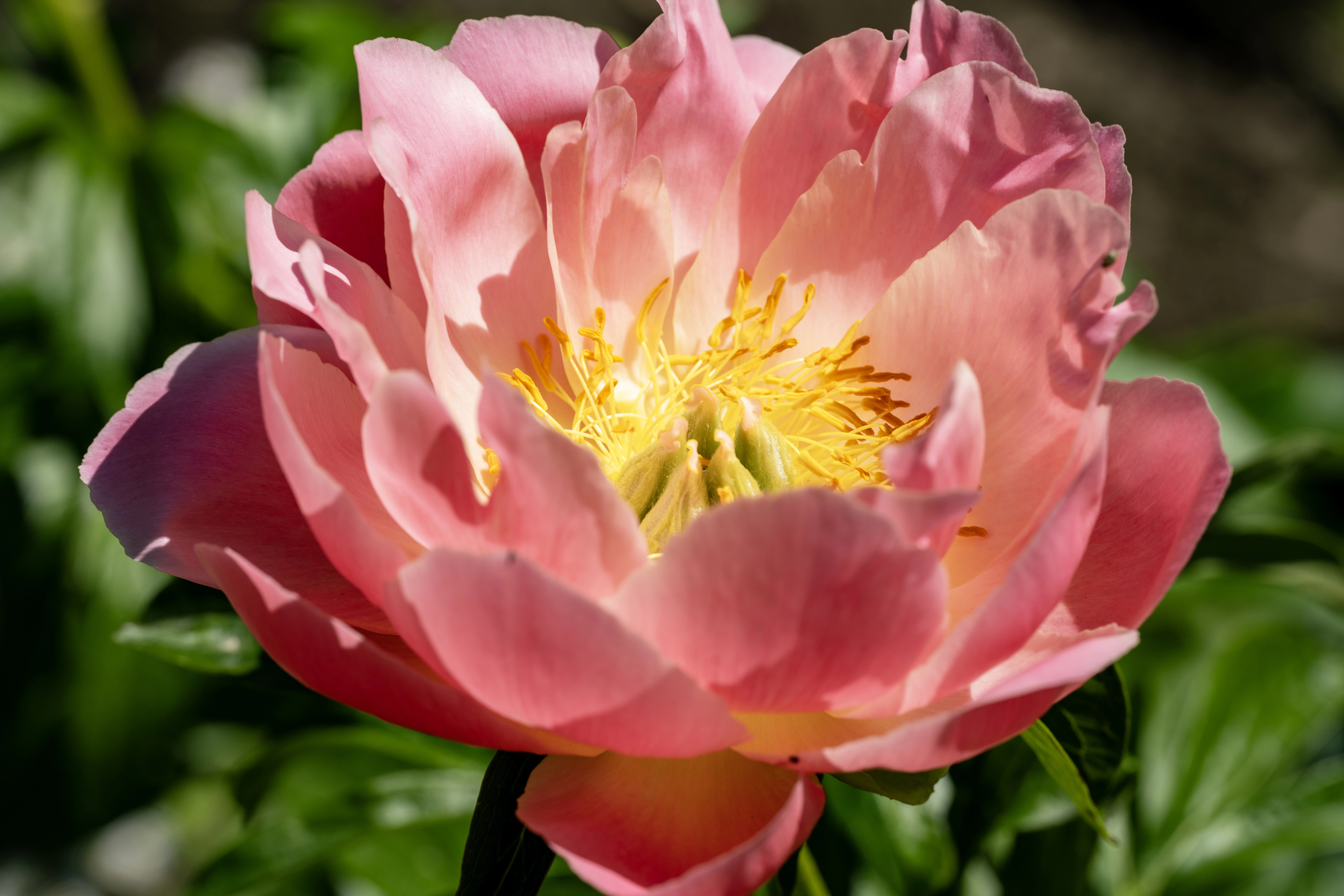
In the higher forms of Samadhi – let us call it meditation – we have Sarvikalpa Samadhi and Nirvikalpa Samadhi. Sarvikalpa Samadhi, with form, necessitates thought, and Sarvikalpa Samadhi becomes effective and powerful if the thought forces naturally flow from one point to the other. There are forms of meditation where a particular object is used. For example, in our case, we use the Mandala, where we effortlessly become absorbed in the Mandala. When we find the absorption through Tratak and the Mandala Practice, we become successful in visualization, where an object is visualized in its entirety. That is why, in Tratak practice, we ask that you focus on the flame, close your eyes, and visualize the flame. With practice, this comes about, and after one has passed the stage of the flame, you start on a more difficult object, and you will find that, doing Tratak on this flower, the things which you have missed with open eyes, you will pick up with closed eyes. You will pick up with closed eyes because you are exercising the Ajna Chakra here. You are exercising the Ajna Chakra, which signifies expanding the mind and awareness. Because, really speaking, these eyes are just instruments. It is not the eyes that perceive; it is something deeper within that perceives that sees.
SARVIKALPA SAMADHI: MEDITATION WITH FORM
So, we come to the stage of Sarvikalpa Samadhi. We need Sarvikalpa Samadhi because our conception of Divinity could be with form, and our conception of Divinity could be without form. We generally describe this as the Personal God sitting in Heaven, then the Impersonal, transcendental God. But everyone on the path of spiritual progress has to reach the Personal God first. Therefore, in our prayer, we say, “Our Father, which is art in Heaven.” To appreciate this, we can use Krishna, Christ, or Rama; you can use whichever Deity you believe in as your focal point. So, from the simplest form of getting this concentration, we develop the visualization of our ideal, Ishta Devata, as it is called in Sanskrit.
You read many stories where, for example, Ramakrishna, the Sage who lived just before the turn of the 19th century, believed in Mother Kali, an Indian goddess. This stone image would come alive, and he could converse with Mother Kali. What has happened is this: by intense concentration, by having developed the power of concentration, not through concentration itself but by training one’s attention, the mind can generate such a force, such a power, that it could bring a stone image alive. You would hear this same thing said to us by Christian mystics, that they would say that “Christ appeared to me.” You see how powerful the mind is, how the mind can be cultivated, and how the mind can gain that depth of concentration. Proper contemplation takes place through the depth of concentration, and by appropriate contemplation, anything can be brought to whichever the mind desires.
For the mind’s desire to take a tangible form, there has to be Yama and Niyama, the purity of life. It is not only a matter of belief; it is a matter of practical experience. It is a matter of practical experience. So, we have two conceptions of Divinity: that with form, Saguna Brahman, as they say in Sanskrit, and we have Divinity, Nirguna Brahman, which is another Sanskrit term for the Impersonal Transcendental God.
To achieve Saguna Brahman, one has to have an object of focus, and that object of focus, like Christ or Buddha or Rama or Krishna, can be brought to its tangible reality here on earth, in front of us. It is not difficult to speak to Krishna; it is not difficult to talk to Christ here and now. It is not difficult. It happens if only we cultivate the mind to its finest level because all those flesh and blood living on this earth have been none better in flesh and blood than you and I. But the quality that was there, that which shone through, was the eternal Spiritual Self. There is no difference between Krishna’s Consciousness and Consciousness. It is the same consciousness, and everyone can say, “I have that consciousness,” but everyone cannot say, “I express that consciousness.” That is why it is said that Christ lives eternally, Krishna lives eternally, and Buddha lives eternally because that Divine consciousness is eternal. From time to time, when the world needs it, consciousness embodies itself to help the world.
Let us get back to Saguna Brahman, the Personal God, and to recognize the Personal God, one needs Sarvikalpa Samadhi, which means meditation with form. So, it is not wrong for anyone to carry one’s ideal within one’s heart, in whatever form. Your ideal could be your wife; your ideal could be your husband; your ideal could be your Guru; your ideal could be your Ishta Devata. It could be Christ, Krishna, or anyone. As long as the recognition is there, it is not the outward form I carry in my heart but the inner spirit that must and does permeate me, which I must not only recognize by the mind but also experience and realize. That is the purpose of Sarvikalpa Samadhi: to train the mind to attune the mind in communion with a tangible reality.
NIRVIKALPA SAMADHI: MEDITATION WITHOUT FORM
That is one form of meditation. When a person progresses beyond meditation with form, he reaches the stage of Nirvikalpa Samadhi, Samadhi without form, meditation without form. In that state, you have now become pure in mind and body. You have now gained the ability to withdraw from your senses. Senses are forever outward going; therefore, we have Pratyahara, where one goes inward. One becomes oblivious to all the objects that the senses perceive or experience because the senses can only perceive or experience the things they can do. The capacity and capability of the senses are tiny and minimal.
In Pratyahara, total absorption takes place by withdrawing the senses because the mind is concentrated. A concentrated mind means that all the mental forces that are so scattered are brought together. After having brought all the mental forces together, contemplation is there, like, as we said, oil being poured from one vessel into another in an unbroken line. When that kind of contemplation has been achieved, then our Ishta Devata, or the Deity we believe in, becomes a reality because of the force generated by our minds. So that becomes Sarvikalpa Samadhi. From there, to reach Nirvikalpa Samadhi, the transcendent Divinity, one has to go beyond all forms. One could never approach the abstract directly except through the concrete. If you do not perceive the concrete, the abstract will forever remain abstract. Although the abstract is the most tangible reality, having reached the Absolute or the abstract, all this becomes but a dream.
We know that while we are dreaming, the dream is so absolute, but it is only when we wake up from the dream that we see in retrospection that it was a dream. Same thing with this life. It is the same thing with the life we live, the same thing with this world, and the same thing with this Universe because when we go beyond, then in retrospection, we will know that this is a dream. It becomes non-existence, which is what the transcendental being means.
Many people will tell you you can achieve that transcendence within one week, four lessons, half an hour each. I am sorry, that is not the experience of Divinity. That is not the experience of the Absolute. Many straightforward exercises will still your mind, and still the mind; you will think that you have reached the Absolute. But it is not so. To get the Absolute is the most challenging thing on earth and in Heaven because Heaven, too, is a conception of the mind. Yes, it is the most difficult thing. Do not be deluded.
WE HAVE TO MEDITATE EFFORTLESSLY, BUT OUR DAILY LIVING MUST BE FILLED WITH EFFORT
What we have to do is meditate effortlessly, but our daily lives must be filled with effort. The man, who was not alert to his daily actions, could never experience the Absolute. Therefore, all these exercises, all these principles of Yoga, are to produce in you that alertness, this deep concentrated mind, the deep contemplative mind, the well-being of the body, breathing correctly, which adds to the well-being, and drawing upon the vital forces to revitalize you. All these things are necessary to be alert, and alert awareness can be developed to such an extent that everything we perceive becomes living and filled with life.
This flower can speak to you if you allow it to. It will laugh with you. Have you taken a walk through these trees here? How they whistle and dance, and that is Shiva’s dance, the dance of creation. How beautiful. But we need alertness, and it is not only a mental appreciation but an experience of what Is. What experiences the “Isness,” the “Is” experiences itself. Therefore, we say, “I am that I am.” The most significant phrase in the world is “I am what I am.” But to know “I am that I am” requires sharp alertness and awareness, and everything becomes so alive. And then we could sing the praises of the glory of God, the transcendent God. Until now, He is abstract, but we, by ourselves, bring that abstractness into concreteness. And then you tell your wife, “I love you,” and every word becomes alive. Your wife or husband does not believe you when you say, “I love you.” Why? Because your words are dead. Every word becomes alive, and then you know the Biblical saying, “First was the word, and the word was with God, and the word is God.” Your word must be the same because there is no difference between your word and that “Word” because it is that word, that sound, that has solidified itself into our little individual selves, and so, connected, vibrationally. If you were sitting here, if you could see how beautifully everyone is connected, like one wave connected to another in this beautiful sea of life, then you can practice the precepts of religion, “Love thy neighbor as thyself.”
To love thy neighbor as thyself is good, Sarvikalpa Samadhi, Samadhi with form. Ah, but there is still somewhere higher to go. The idea is to become love. Then, I do not need to love you when I am in love. And when you are in love, all the little loves merge into you. They all merge; there is no separation. How can I love you when you are me? How? How? No question is left. No effort is left, and you just exist in your Isness. You exist in the essence, which Nirvikalpa Samadhi does for you. That is the joy and the glory of life. Why suffer limitations when you are limitless? We have the right to say, “I and my Father are one.” If we reach Christhood, if we get to that stage, all becomes one; there is no object, no subject, no duality, and there is Unity. That Unity- Consciousness comes through Nirvikalpa Samadhi. In that unity-consciousness, this is how the highest concept or form of abstract Divinity is brought into our concrete lives. According to Patanjali’s Yoga, that is the purpose of life.
Patanjali’s Yoga, which was composed about two thousand years ago, was excellent and more good than good at that time. What we have done in our system of meditation is that we have taken the essence of all the Yogas, taking the essence of all the Yogas of Patanjali’s Yoga, of Sankhya Yoga, of Vedanta, of all the various Christian teachings, Buddhistic teachings, Tibetan teachings, Taoistic teachings, and taken all the essence of all these teachings and brought it into a very simplified form, so that it can be practiced in this modern century. And our teaching is there to last for another two thousand years. Remember that.
… Gururaj Ananda Yogi: Satsang UK 1978 – 04